You will know them by their stumbling gait

You may already be aware of my interest in the biblical practice of lament – I’ve written about it elsewhere, bang on about it regularly, and have found it essential for being able to hold onto my faith in the many contexts where it seems that God hasn’t acted as he should have.  I recently caught up with a friend who is going through a tough patch, but who has been repeatedly told – directly or indirectly by their Christian community – that the kinds of questions and complaints they have about God are wrong and unacceptable.   I believe my friend is simply being courageous and honest in their appraisal of the intersection between faith and life: it is messy.  It can be awfully hard. If God is our rock, our strength, our protector, our provider, our vindicator, then questions and anger are reasonable responses to situations where it feels like God has abandoned us, not protected or provided as the preaching and worship songs promise us on the weekly.  And yet so many Christian responses that are shared with people in times of crises are woefully inadequate, overly simplistic and make people feel like they’re faith failures and no longer belong. Turns out that only the tidy, together ones may enter here.

I find this deeply frustrating because the kind of faith my friend is expressing is actually deep, even if it is tenuous and hanging on by a thread.  As someone once described it: it’s a faith that’s clinging to God against God; it’s being real about the ups and downs of a relationship with God. It refuses to settle for a truncated theology that only allows good things to be said about God. It demands honesty and accountability with God. It wants a real relationship with God, not one in which only rosy, nice things can be said. And it reckons (like the Psalmists and Jesus himself on the cross) that God is big enough to handle our complaints. So I tip my hat to folks like my friend, and aim to follow in their honest footsteps in my own, rather tenuous relationship with God.

All of this led me to reflect on the biblical portrayals of the people of God.  They almost always don’t have it all together, and when they seemingly do (I’m looking at you ganteng Solomon), the façade lasts a few chapters before it all comes crashing down anyway. As someone who regularly doesn’t have it all together, I take great comfort in how wonderfully messy and stumbly the people of God are. So I wrote this little piece to my (seemingly) tidier brothers and sisters of the Christian faith who – for whatever reason – struggle to match the courage, honesty and depth of my friend:

Do you remember Israel’s story?

[Pairs well with on the nature of daylight by Max Richter]

Do you remember Israel’s story?

Oh, it started in a Garden designed and landscaped

by God himself

But that’s one short chapter

– An important one, I’ll admit –

But it’s one short chapter

And in no less than three more

The pages are splattered with blood,

Flooded with hurt and smelling of death.

____

Do you remember Israel’s story?

Do you remember where Israel got its name?

It wasn’t in the temple with songs and arms uplifted

It was in the dark of night

When Jacob fought God

And limped forever more.

____

Do you remember Israel’s story?

Slaves to Pharaoh for four hundred years –

Four hundred years

Four hundred years

Four hundred years of crying out to God without an answer

____

Do you remember where God ‘rescued’ the Israelite slaves to?

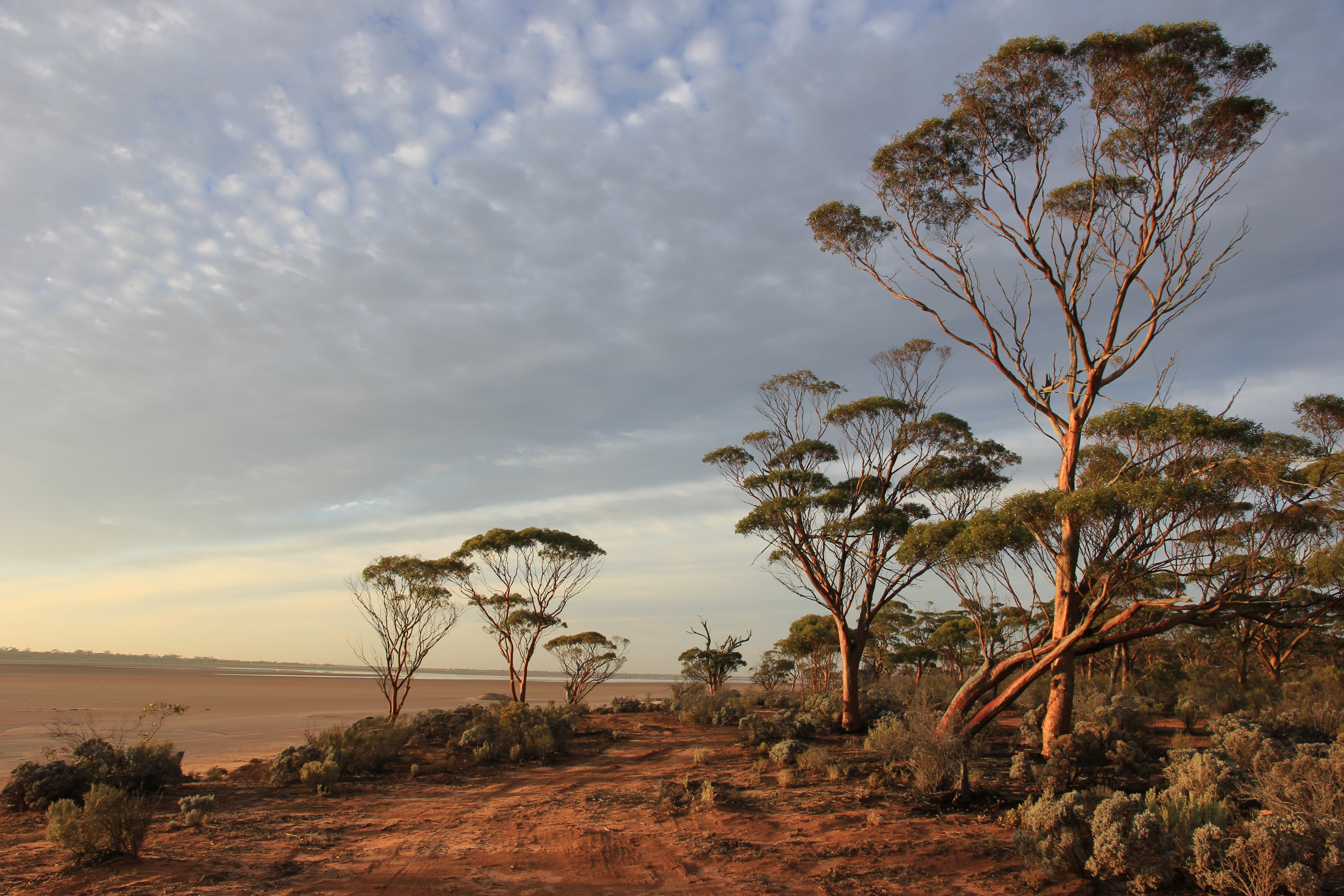
It was to a desert, a wilderness

A place of merciless heat and long, sunburnt days

Of freezing cold and shivering nights

Of aimless, purposeless wandering for forty years

Forty years

Forty years

Forty years of shivering, sunburnt, aimless, purposeless wandering.

____

Do you remember Israel’s story?

After four hundred and forty years

They were turned back at the gates of the promised land

Deported, driven back, banished for another lifetime to that desolate place.

_____________________________

So go easy on the ones who are living through some kind of

Four hundred and forty plus years

Of blood splattered pages

Flooded with hurt and smelling of death

Folks who limp because they’ve gone twelve rounds with God

Or spent back-to-back lifetimes in desolate places

____

Your tidy togetherness has poorly prepared you

For the Jericho Road that runs narrow and winding

from Eden to the Promised Land

You’ll be needing their wounds to bind your own

When you discover the unavoidable reality

that Christ is inviting you to a cross on a hill called Golgotha,

That the good seed you are

Is no use to God or the world

Unless you first die and are buried

____

I suggest you keep these people close.

Make them your friends.

Ask to sit at their cracked and muddy feet.

And take off your polished shoes in their presence,

For the ground they stand upon is holy.

____

Do you remember Israel’s story?
Posted in Uncategorized | Tagged , , , | 3 Comments

Podcast: Shirantha Perera on fostering hope

Hope, and having hope are profoundly important for a well-lived life, but in faith-based development circles, we lean towards focusing on tasks and measurable outcomes; we don’t tend to think about whether our interventions are fostering hope or degenerating hope. We don’t design or evaluate for hope despite they way it is foundational to people’s well-being.  In this episode I have a chat with the wonderful Shirantha Perera about his Masters research looking at the impact that a project has had not just on people’s livelihoods and environment in Timor Leste, but how it has impacted their faith or spirituality, and their hope specifically. You can also access the podcast here.

Posted in Uncategorized | Leave a comment

Some paras and a prayer

As you might already, I’m a big fan of the work of Manna Gum, and not just because they included my article in the latest Manna Matters – I recommend reading the whole thing and signing up for future editions (better yet, take a day off and trawl through their back catalogue!). You can read the latest Manna Matters here.

And here’s a prayer I wrote for the latest Amos Magazine that’s just been printed – if you’d like a hard copy, let me know and I’ll get one sent to you (such are my sweeping powers).

A prayer for help in hospitality

Father, Son and Spirit

We’re so comfortable living in your creation and presence

That we hardly notice your generous hospitality

Or the space you carved out for us.

You have crafted so thoughtful a welcome

So warm and gentle an embrace

That at times we start thinking your world belongs to us, and is our handiwork.

Forgive us for those times and restore us:

Sit us back down at your bountiful table

Teach us again the basics of hospitality

And the artistry of your neighbourliness.

Drill us in the craft of making space for those

Who are told – one way or another – that they don’t belong

Make us masters of making room for them

So that the lie of not-belonging is simply untenable

Because they feel your open-armed welcome

Is genuine and present in us.

Make them no longer strangers or enemies or guests

But friends, dearly beloved friends.

We need your help

and rather a lot of it

So guide our stumbling feet

And embolden our trembling hearts.

Strap us in, cover us with grace

and make it loads and loads of fun

For the sake of Jesus

Amen

Posted in Uncategorized | Leave a comment

A Good News Story That Won’t Make the News

I’m keenly aware that the bad news columns of our proverbial newspapers are resorting to smaller fonts and shrinking margins to fit everything in these days, while the good news sections are looking increasingly sparse. But history – and I’d argue the Gospel – demonstrate that even when there’s much to lament about, there have always also been parallel pockets of defiant goodness and beauty (think Jesus’ work in the face of the Roman Empire). It’s important that we take the time to share these stories as a means of encouraging one another ‘towards love and good deeds’ of the type that plods on without falling into the traps of optimism, triumphalism or naivety. Here’s one such story of defiant goodness from one of Amos Australia’s partner orgs.

CONNECT is a community-based drug rehabilitation support ministry of a little church in a slum area of Phnom Phen where people have built their shanties over the top of an old cemetery.  CONNECT uses a creative, collaborative model and isn’t a rehab.  Instead, it has a small network of volunteers who live in the slum, running workshops there on the impacts of drug and alcohol abuse.  They often come into contact with people who are in addiction, and when they request it, CONNECT assists them in their recovery.  CONNECT covers the year-long cost of an addict living at the Teen Challenge rehab 40 minutes away – a cost that they and their families simply can’t afford.  CONNECT walks with them through their recovery by mentoring, visiting regularly and bringing family members for monthly visits.  Prior to the person exiting rehab, CONNECT assists in preparing the family and community for the person’s re-entering into regular life – it’s a big adjustment, and re-entry is a difficult period for everyone.  The church that CONNECT is supported by is primarily made up of people from the slum, and has a high percentage of ex-users as well – so it’s a supportive community where the men tend to feel at home.

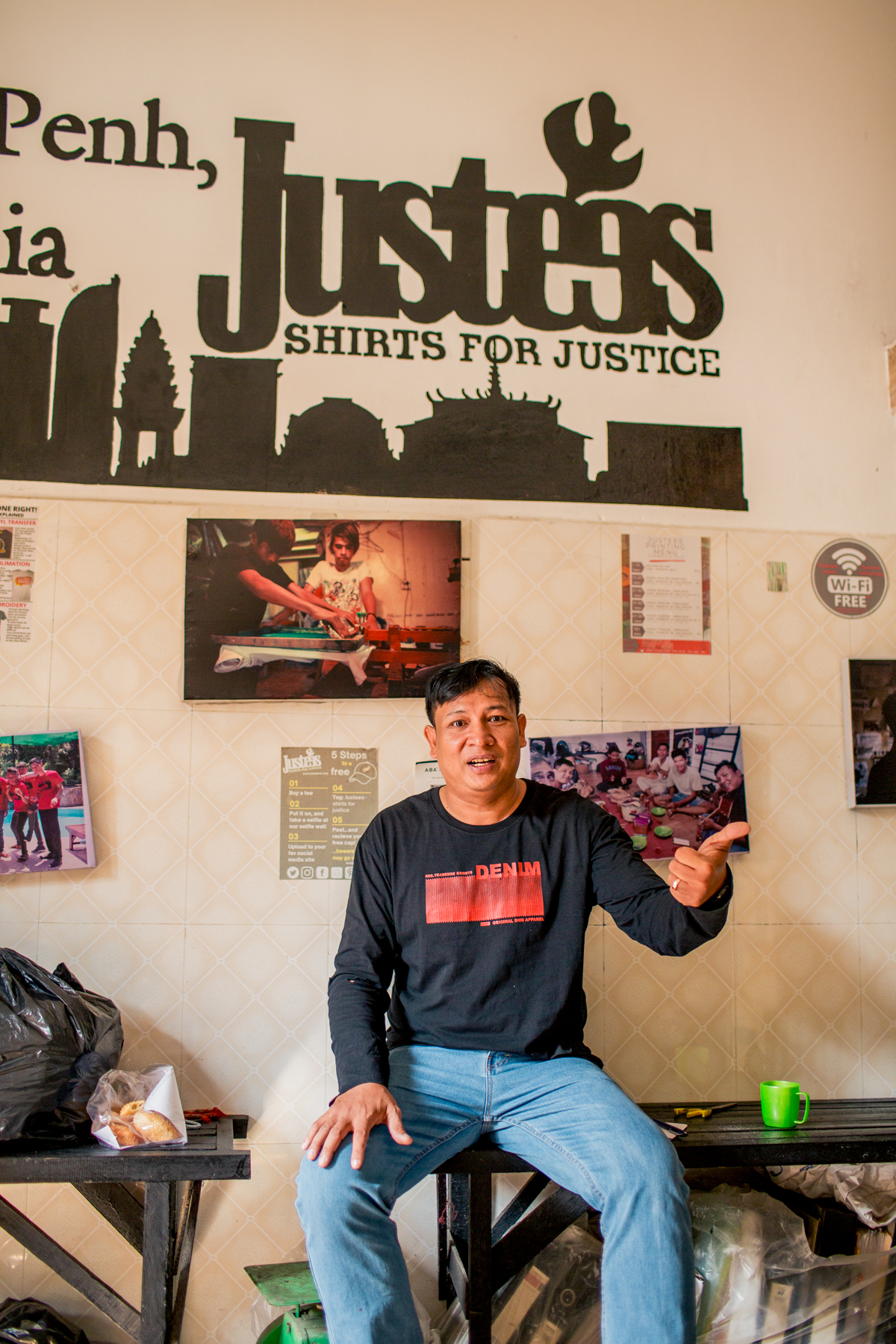
We recently visited this good work, and met Rahul who was initially supported by CONNECT and now works for them.  He has a wife and young child, and splits his time between CONNECT, serving at the church and working for Justees, a fantastic social enterprise that offers employment pathways for men in recovery from addiction.  We also headed out of town to Teen Challenge and met Bona who was in his second or third week of rehab, supported by CONNECT.  Bona had a posture I’ve seen many times in people who are early in their recovery from addiction: eyes downcast, shoulders slumped, mostly avoiding eye contact and a short, nervous smile – perhaps struggling with shame and regret. But it’s a courageous person who takes the hard step of dealing with their addiction, and I tried to tell him as such.

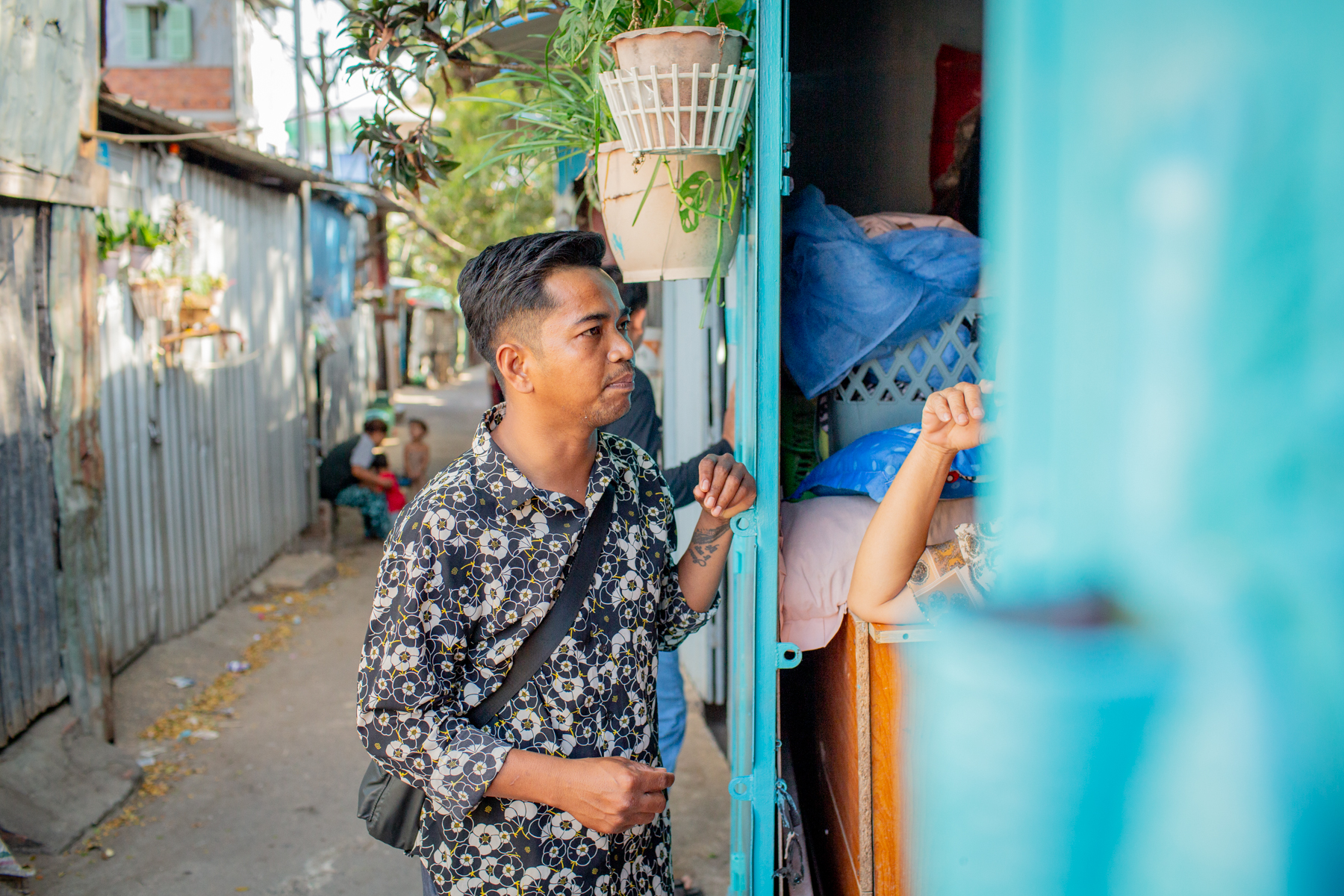
Rahul talking with a mother of an addict CONNECT is currently supporting
Photo: Arlene Bax

A few days later we joined the Sunday morning church service and Rahul was preaching.  He was energetic and confident, with the air of someone who has found that beautiful place where their gifts line up with a need in the world.  I couldn’t help remembering Bona and reflecting on the odds that Rahul had a similar posture at the start of his recovery – the man we heard preaching that morning was a walking testimony to the support that CONNECT provides.  My prayer was that Bona’s recovery will be similarly restorative, and the high success rates of CONNECT-supported people give me hope.

CONNECT runs on a shoe-string budget.  None of the staff are paid and they share a tiny office with Justees.  All funding they receive goes towards covering rehab costs, supporting people in their recovery and ferrying people to and from Teen Challenge. Somewhere on the road I asked Phanna – who heads up CONNECT – how things were going.  ‘Great!’ he said, ‘We’ve managed to support more people than we normally could this past year.’  I asked him how they’re travelling financially.  He replied, “Well, we always have enough.  Last week we had $120 in the bank, and had to pay a bill, so now we have $80 [he laughs]. But we haven’t run out of money yet.”

The indefatigable Phanna
Photo: Arlene Bax

Phanna wasn’t groveling.  He wasn’t asking for money.  He was smiling (he does that a lot) and stating some faith-filled facts that are grounded in a genuine trust in God’s provision for the work Phanna believes God has given him to do. The slum-dwellers face complex, almost insurmountable challenges that extend well beyond the substance abuse that CONNECT seeks to address. But CONNECT presses on, faithfully doing the work they’ve been called to, and handing over the rest for God to sort out. 

These small pockets of defiant good are worthy of all the support and encouragement we can provide.  And I’m hoping that as our partnership develops and deepens, some of Phanna’s faith, Rahul’s vocational sweet spot and Bona’s courage will rub off on me and help shape the other little org that I dearly love called Amos Australia.

This article will be published in the upcoming Amos Magazine. You can access previous digital versions here, or let us know here if you’d like to receive a free copy fresh off the printer in a few weeks!

Posted in Uncategorized | 2 Comments

A Piece of Wild Things

We were walking as a family through one of the canyons of Purnululu – I feel like the word ‘profound’ captures but a gram of the place – and it seemed the right place for a dose of the peace of wild things that Wendell Berry so aptly captures in his poem of that title.  This particular canyon was the kind of place that if you tried to absorb and observe the grandeur, you’d simply never leave.  The canyon walls are made of some kind of sandstone embedded with river stones – those rocks that take so long to become smooth and rounded.  Small ferns and trees cling to ledges in the canyon walls, spiders cast their gentle webs across cracks, and the calls of tiny birds reverberate as they flit from tree to tree.  No camera can capture it and my descriptions are inadequate – you know the kinds of places – they can only be experienced.  Whatever your position on how these things came into being, a reasonable, common response is one of humbled amazement.

Presented with this deep beauty, I leaned in, ready to bathe for a while in the peace of wild things.

The challenge was that we were walking as a family, with four kids under the age of thirteen.  The eldest’s current obsession is cars, and he regaled me with how cool it would be to race something (cars, bikes, anything really, provided it was fast) through the narrow canyon.  The second – a newly minted twitcher – was giving a rather detailed run-through of a new bird seen the previous day.  We’d spotted it together, but she felt it best to retell the story to everyone who had been there with her, and in doing so, scare off any birds we might see in the canyon.  The third child wondered out loud and sought my expert opinion on what kind of machinery would be most suitable for digging future, similarly sized canyons – and how much dynamite did I think we would need?  The last child ached every ten steps or so for a lolly break and advocated quite loudly and regularly to that effect, but – to his credit – said he was willing to settle for a dried apricot should I be open to negotiation.

I love my kids – they really are wonderful people – but I may have loved them a little less at this point.  They were getting in the way of my peace of wild things, and I channeled a nameless someone who – at what could only have been similar, regular points in my own childhood – once declared: ‘Oh, won’t you just blow-up and bust!’

I settled for something like an angry: ‘Oh, won’t you all just grow up and quietly enjoy this place!’

In the minutes that followed, I was reminded of Jesus’ words that, ‘Unless you become like one of these children, you cannot enter the kingdom of God.’  I pondered that instruction with a generous dose of frustration and a pinch of anger as we continued to wander up the gorge.

But – not surprisingly – he’s right.  My kids (perhaps excepting the youngest at this point in the walk) were enjoying the canyon.  They just weren’t enjoying in the way that I wanted to enjoy it – turns out there’s more than one way to walk a canyon.  You can aim for some profound experience of peace, or you can dream about races, birds, machinery and lolly snakes.  Canyons can be places of serious contemplation.  But they’re also ripe for ridiculous and wild wanderings of the imagination.

So I attempted to enter into their ‘childish’ playfulness, and saw the canyon in a different – dare I say – equally important way.  Life doesn’t need to be – shouldn’t be – all serious contemplation.  We need times of recalling detailed beauty – remembering the plumage and colouring of the birds from yesterday.  It’s good and healthy to long for and enjoy treats or yummy food.  There should be space for adrenaline rushes – hurtling towards rock-faces or blowing them up.  Turns out that the kids weren’t the one with a problem: I was the one who needed to grow up to be more like them; imaginative, playful, wild.  I needed a piece of wild things, kid-style (with apologies to Mr. Berry).

Well, we got to the end of the canyon, and an unforced silence settled over us while we snacked on those much-longed-for apricots and drank in some of the beauty and grandeur that the canyon generously offered us. And – with a childlike wonder that I also need to learn – our youngest son interrupted the silence at some point with a quiet and unprompted, but fitting: “Thank-you Jesus.” 

We rode imaginary motorbikes back down the canyon stairs, jumped tumbling boulders that exploded under us and needed heavy machinery. We pretended that we had discovered a brand-new species of bird (keep an eye out for the lottian bergsmacus, it’s a quiet but sweet little bird), and made it home to a sumptuous meal of ten hundred thousand kilos of lolly snakes that don’t give you belly-aches. 

And I didn’t lose out on the peace of the wild things, for in amongst it all, I felt that too.

Posted in Uncategorized | 6 Comments

A conversation with Steve Bradbury (part 5 – final)

This is the fifth and final podcast I’ve recorded with Steve Bradbury. It was a longer conversation, so it’s been split into two shorter episodes. In the first, Steve shares about what happened after he left TEAR Australia (now Tearfund Australia). He shares about his work in developing the Masters of Transformational Development – the course that I completed in 2018 and helped facilitate for a few years.

The second and final episode of the series is Steve providing some responses to questions that arose for me through these conversations; questions about the role of prayer in faith-based development, what has helped sustain his integrity, generosity and hope over the years, and what he sees are the current blind spots of faith-based development.

You can listen to all of the earlier episodes here.

Posted in Uncategorized | Tagged , , , , | Leave a comment

A conversation with Steve Bradbury (part 4)

This is the fourth podcast I’ve recorded with Steve Bradbury, and in this episode, Steve shares stories from his final years in his role as Director of TEAR Australia (now Tearfund Australia). He shares about his work in bringing international faith-based development organisations together, how and when he came to the decision to leave TEAR, and shares a bit about what he felt were the hallmarks of faith-integrated development as he exited TEAR.

You can listen to episode 1 here, episode 2 here or episode 3 here or by scrolling down to earlier posts. You can also listen to all of the episodes here.

Posted in Uncategorized | Leave a comment

Beauty and the Beast

Dave had told me a few times in the preceding weeks that he couldn’t find the flight I had booked, and so he’d bought a ticket with the same airline leaving a few hours earlier.  I put it down to one of the great mysteries of travel arrangements and used the extra few hours to visit the gents at Justees – a social enterprise that provides employment and mentoring for at-risk youth and folks in recovery from addiction in one of the slum areas of Phnom Penh.  Great guys, great program.

Turns out my airline had cancelled the flight and shifted me to an earlier time – the flight Dave was on. They had told me a month or so earlier, but I had forgotten to print the updated ticket.  With no more flights available that night, I re-booked for the morning, and arranged a six-hour taxi ride for the next day – the change of flights meant I would miss my connecting flight to the north of Thailand.  It was a beautiful drive, particularly the last hour or so as we climbed into the mountainous areas.  I arrived five hours later than planned and had a quick chat with my friend before walking a short way up the hill to the Bible College for a Christmas service. They had held off starting for a few hours until I arrived. I’m not sure we’d be that hospitable back home in Freo.

We didn’t stay in that place for long – a whole 72 hours or so, and 72 hours is too short a time to draw any firm conclusions.  But we heard a lot of stories about the challenges and difficult decisions Karen people fleeing conflict in Myanmar have to make.  They have the choice of living in the refugee camps in Thailand and hope for resettlement (5, 10 years? never?) or live a risky but freer existence outside the refugee camp with no rights and an ever-present threat of arrest or trumped up fines.  The contrast between the choices available to me and my friend couldn’t be more stark.  He shared stories about the tenuous existence his people have wedged between the ever-present danger in Myanmar and living as undocumented migrants in Thailand.  I found myself angry, unsettled and ashamed that Australia has largely forgotten and passed over a terrible injustice so close to home.  The folks I met nodded quietly when I apologised for this – they’re keenly aware of this reality and feel that the world has forgotten their plight.

Yet the hard stories I heard were peppered with profoundly beautiful moments.  A sunset over the Myanmar mountain range just across the border.  The singing – I am on the spectrum of Christmas grinchs, but the voices of the Bible College students transformed those Christmas carols from something I detest to wanting more.  We enjoyed a delicious Thai barbeque picnic under the stars while the students sang and danced – hilarious moves by one of the more serious faculty will remain etched in all our minds.  We were serenaded the following night at the front door by a dozen young people armed with a guitar and beautiful harmonies.  I may have even worn a Christmas hat at one point.

As we boarded the flight home I got thinking about the contrast between hard stories and profound beauty we’d experienced.  I have trouble reconciling them in my mind, but my sense wasn’t that the singing and fun were some sort of glossing over the difficult.  It didn’t feel like they were trying to shout down the difficulties or escape for a while – at least it didn’t seem that way.  I’ve heard somewhere that 72 hours is never enough time to draw hard conclusions. But it felt different.  Like they could somehow weep and dance at the same time, feel oppressed or overwhelmed and sing up-lifting songs at the top of their lungs. They could look their situation in the eye while telling jokes and belly-laughing.

I tend to gravitate towards one or the other. I drown in cynicism or seek out chocolate and pop music in hopes of being bouyed by sugar rushes and uplifting chord progressions.  These folks seemed able to stand a middle ground and hold beauty and the beast at the same time. 

I’d like to develop that ability.

p.s. I’ve not shared my friend’s name or the specific location we visited for his safety.

Posted in Uncategorized | 4 Comments

A conversation with Steve Bradbury (part 3)

This is the third podcast I’ve recorded with Steve Bradbury, and in this episode, Steve shares more stories from about 5 years into his role with Tear Australia (now Tearfund Australia), with particular attention to the creative ways that Tear engaged with its supporters and how that was received.

You can listen to episode 1 here, or episode 2 here or by scrolling down to earlier posts. You can also listen to all of the episodes here.

Posted in Uncategorized | Leave a comment

The upside of plagiarism

A few years ago I was grading a student’s paper and it was brilliant – really engaging to read, with thought-provoking and solid, nuanced analysis. It said some challenging things, but with an uncommon grace. It all seemed a rather too-large improvement for what I’d come to expect from this student, and with a little bit of digging, it turned out that the essay had rather neatly plagiarised some articles about biblical economics by Manna Gum. I spent the next few hours reading my way through their website, signed up for their newsletter and began listening to their podcast. The content and communications by Manna Gum are one of very few that I read through entirely – they are a rare voice in the Australian Christian landscape, and I’d really encourage you to check out their work and consider supporting them if you have the capacity.

Manna Gum publishes Manna Matters three times a year – it’s always a really good read (and it’s free!) – and in the freshly published August edition I was asked to do a write-up about the house we’ve built here in Fremantle. You can read the article here, and you can read the whole August edition of Manna Matters here. And if you’re ever in Perth and would like to share a meal or a cuppa and have a wander around the place, let me know and we’ll line it up!

Many thanks to Jonathan, Kim and Jacob for this opportunity and for their wisdom and encouraging example (and collating of examples!) of attempting to live out the gospel in everyday Australian life.

Posted in Uncategorized | 4 Comments