Being a relatively young, rich, white, Australian introvert, it’s looking like I’ll come out of the other side of COVID-19 in much better shape than the vast majority of people around the globe. In God’s economy I believe that gives me greater responsibility to serve and contribute to a long-term response that ensures everyone (including the earth) is cared for on the other side. We’re still working out what that should look like, and we’re trying a few things – but any ideas are welcome!
@covsinghtj
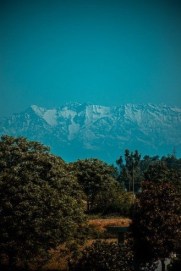
But – as so many people have already pointed out – a crisis is a great opportunity for change, to rethink things and to imagine things that previously we thought impossible, but are now not just possible, but already done. Big things like reducing pollution levels so that Punjabis in Northern India can see the Himalayas that have been hidden by smog for decades. Small things like me being unhurried enough to see and learn about a local bird I’ve never seen before: the black-faced Cuckoo-shrike. My bird-watching brother-in-law (who lives in the same suburb as me) tells me they’re fairly common around here! I’ve been reminded that there’s as much God-crafted life and beauty to ponder in a few hundred square metres of Beaconsfield as there is in exotic locations abroad.

©Vic Dunis
One thing has struck me in particular though. I’ve been so encouraged by the way in which the overwhelming majority of Australians have made significant changes to their lifestyles for the sake of vulnerable people they’ll likely never meet – the elderly and folks with respiratory illnesses. While a number of external factors have helped get COVID-19 under control in Australia – the quick closure of borders, high rates of testing, low population density and so on – overwhelmingly the success has depended on literally millions of Australians choosing to stay at home and away from family and friends. Keeping our hands firmly (if somewhat awkwardly) in our pockets instead of giving the usual hugs and handshakes, being rigorous in our hand-washing and available to support vulnerable neighbours. I’m not suggesting it’s been easy or without significant impact, but we have done it. We’ve achieved an incredible thing for the sake of vulnerable people we’ll likely never meet, and it’s largely been achieved through a collective willingness to forgo personal liberties. I’m not sure that we’ve grasped how big and how beautiful a thing it is that we’ve achieved together!
I find this very encouraging – and also a little intriguing. As Australians, we tend to place a high value on individual autonomy, and (in my limited experience) often don’t see much correlation between the lifestyle choices we make and the lives of vulnerable people locally or overseas. And while I understand why that is so, we’ve proven in these past months that not only the way we live impacts the vulnerable, but that there’s a tipping point (and I’m not sure what that is) where we’ll be willing to make significant changes to our lifestyles to protect the vulnerable in our community. Even at great personal cost and huge national economic cost.
I can’t help hoping that once the smog of COVID-19 lifts we’ll be able to see clearly enough to appreciate the mountain of vulnerable people overseas who have long been requesting and deserving of a similar response from us. Because our lifestyle choices impact them as well – so what is (or has been) the tipping point for us to act for them? A deeper understanding of those links? a personal encounter perhaps? I don’t know – I’d be keen to hear your thoughts.
 patmos
Thanks Clint …. for raising the “ongoing question”. Relative to many; even when we think we’re doing life tough, we have it so good. A bit of a heart search might be appropriate.