a wild night at Clancey’s

they fought on the road,

so I waited, car running,

’til they moved to the sidewalk.

I parked

they battled,

I entered the pub,

they moved to the carpark.


I saw them next,

him standing over her

landing fist after fist

while I mapped out

the notes of a dark ale:

coffee,

chocolate, and,

-punch-

roasted – punch –

roasted – punch, scream –

roasted marshmallow.


I saw it all

and a small voice inside

invited me to

offer chips and a chat

when he took a short breather

from beating her.


but my mind ran ahead,

to a fictitious future

and the little voice said:

what happens next’s

a blank canvas.


so I brushed over

the invitation

with a light fog of fear

and layers of opaque excuses,

but the red marks on her body

bled through all that grey

turned it purpley- blue like a bruise.

he was busy flinging pigment

with doubled up brushes,

raven-dark anger,

and vomit self-loathing,

a collapsing black-hole of destruction.


I added some layers and splashes of shame –

– that most rancid of colours –

which consumingly spread

‘cross the page

while the cops

washed the place

red-flashing-blue.


but they couldn’t fix

her body,

his mind,

my heart,

and they faded

with the flick

of an interior switch.


I tried hosing it all

with a fresh pint of beer,

but it turned everything brackish

as it ran down the canvas,

and mixed with her tears,

in a nauseating mess on the floor.


we rolled in that muck

as we slept

a most uneasy sleep –

she in the park,

he in the watch-house,

me in an orthopaedic bed.


I awoke at 3,

to white-wash it all

with freshly-dredged promises:

I’ll be different next time

I’ll act when you ask me

I’ll stand up and speak.

but I’ve failed those commitments

more times than I’ve made them,

they don’t hold

in the frame

of life

anymore.


so I lay there,

exhausted, spent, silent.

and the small voice inside

invited the crying

and told me I’d missed

the wildest

part of the story:


that

through every

second

of our shared thirty minutes

we were

held

in the Father’s embrace.


we were cherished

surrounded

loved by

and hoped for

wept over

and cried for

through every

long drawn-out

second

of our shared thirty minutes.


I paused

and I looked –

the picture was different.


still horrid,

still messy,

but different.


it was lightly re-framed,

with dashes of hope seeping through.


– Fremantle, 19-11-2019


Posted in Poetry | 10 Comments

cf Lk.10:25f


I’m on the plane home after spending this past week travelling Eastern Sumba with a few of the other Amos Australia folk – Jake, Arlene (staff members) and Diane (board member).  I’m looking forward to being home and the ‘number and highlights’ chat we often have around the dinner table.  Each person picks a number between one and three to indicate what sort of day they had (one is a sad day, three is a happy day, two is a bit-sad-bit-happy day).  If you’re lucky and ask nicely, sometimes you’ll be granted more than one highlight.

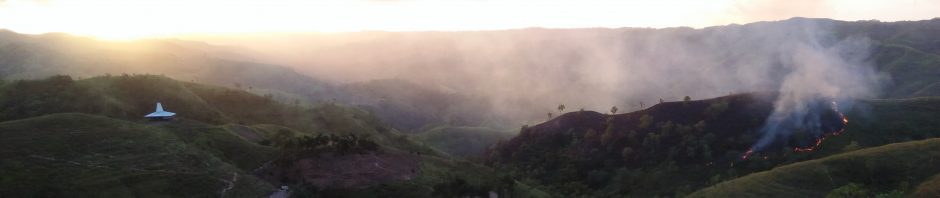
I’d say my week was a number three, hands-down: lovely travel companions, encouraging visits to partner organisations and a clearer sense of where things are at and what’s next.  But my highlight for this week was spending the night with the community in Prai Hambuli, Eastern Sumba, a place that can only be accessed by motorbike (or 4WD) when the weather is dry; any rain and you’ll slide down one side of the valley, and never get up the other.

As usually happens when I’ve visited rural communities in Indonesia, our arrival interrupted their work – they were clearing a path through the scrub for the impending delivery truck – but they downed tools and kept us filled with food and fresh, sweet coffee until we left the next day.  I attempted to learn a bit more Bahasa Sumba – ngutah laku la mata wei (let’s go to the spring’) and ngangu uhuh, unung kopi (‘eat rice, drink coffee’ – four key words on a rural Sumbanese menu).  We walked down to the spring, a 1.2km round trip down a deep valley that our host currently travels three times a day to keep his family hydrated.  There’s so much I loved about staying with that community – the landscape, the generosity, the tenacity, the adaptability and patience of the people, the lack of mobile phone access.

But my second highlight (if I asked nicely, and if I was lucky enough for it to be permitted) would have to be meeting Ibu Ifa, one of the teachers at the community school.  Originally from Makassar, I asked why she came here – it wasn’t her choice, she was quick to reply, she was posted here for five years by the education department.  The first time she tried to visit the village, the access was too difficult and dangerous, so she went back to the main town and tried again a few weeks later.  She said that when she finally arrived, she cried every day for the first week – it’s so remote, so different and difficult compared to life back home; no running water, no electricity, no internet access or the company of family and friends, a new language, monotonous food.  She’s made a little bedroom in the corner of a classroom, and keeps her parents from worrying about her by talking up her situation, being careful about which photos she sends them, and declining requests by them to visit.

But she moves and speaks in a way that suggests she’s not just here to bide her time, but to serve the 40 or so students under her care with everything she’s got.  She speaks gently about the kids, empathically about the community, and angrily about the education department who are slow to send supplies and haven’t visited in two years because of the difficult access roads.  She tells us about another teacher who had been posted to help her, but he didn’t even get as far as the turn-off before he legged it home again – a common story I hear about teachers and nurses in rural areas (and I would probably do the same!).  She speaks firmly about these things, saying ‘if I can do this as a young woman, why can’t he?’  Fair question.

When I asked her why she doesn’t run away like the others have, she gave a little shrug and said, “It’s what’s been assigned to me, this is my responsibility, and I need to do my bit for this country,” which I have a hunch was a significant downplaying of what drives her.  She could run away, as so many others have.  But she’s chosen to stay and serve the children under her care despite the overwhelming conditions.  She seems utterly determined to serve teach them as best she can with the little resources she has.

I’m not sure that I’ve captured her presence very well.  People like her are hard to describe – you can’t pin down what it that is so attractive about them.  It’s not just that she’s chosen to stay, it’s not just that she speaks gently, it’s that her whole posture and being has a presence and purpose about it; there’s a deep integrity about her, a loving, generous hopefulness towards the world that permeates everything about her – the way she speaks, the way she interacts and carries herself.

And so I found myself encouraged and challenged by Ibu Ifa.  It’s easy for me to spend one night of restless sleep on a bamboo floor and then head home and share a story.  It’s far more difficult to stay in a community for a number of years – enter the relational complexity there, live and breathe rural village life, be the target of every complaint against the education department, teach hungry, tired and distracted kids, and do all of that with a posture of grace, love and humility.  I found myself wondering how I’d hold up under those circumstances – I’m not sure I’d end up serving with the heart that Ibu Ifa does.

So if you’ve got a minute, maybe offer a prayer of thanks for Ibu Ifa, and the many, many folks like her who willingly serve with love in far-flung places.  They do it knowing they’ll never receive acknowledgement for it, and they often do so in very difficult circumstances. But it’s folks like Ibu Ifa that this world needs more of.  Perhaps we don’t need super heroes or international programs as much as an uprising of Ibu Ifas who are other-oriented, gracious, and gentle.  People who personify so much that I love about the teachings of Jesus.


If you read this again,

Would it change anything,

If you pictured her

Wearing a hijab?


Ibu Ifa

Photo courtesy Arlene Bax

Posted in Uncategorized | 6 Comments

To the tune of Psalm 88

if you can’t contain

tsunamis

earthquakes

or your anger (if that’s what it is)

let them pass over the poor

and swallow up the pharaohs

so I can cling

to tasteless crumbs of justice

when it seems your grace is dead


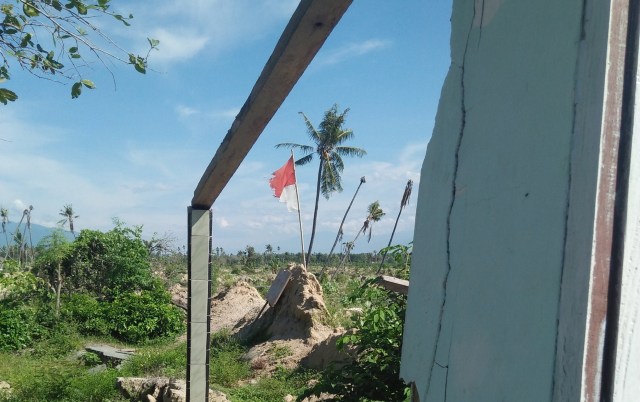
– Palu, Central Sulawesi, May 2019

IMG20190508145130

Posted in Indonesia, Poetry | 4 Comments

The importance of bare feet for poverty reduction

She runs a little warung in the hilltop valley of Kannangga, the pitstop that everyone looks forward to.  The road to and from her timbered café is winding, ever winding, twirling back and forth through the mountains, dancing up and over, ‘round and doubling back again, twisting and spinning to the rhythm of vehicles switching between first and second gears as they attempt to stay upright and forward-moving on a road that seems more pothole than asphalt.

It’s a longed-for pitstop for me, but it’s home to her.  It’s a place where I rest a while, sip some sweet black coffee and build up some courage for the next hour of gorgeous, spine-pounding road.  But it’s the place she grew up in, the place she knows intimately. It’s home to her, and its memories and company were sweeter and more compelling than the steady job she tried in Surabaya some 900kms away.  So when home called her name, she returned and began serving kopi to weary travelers like me.

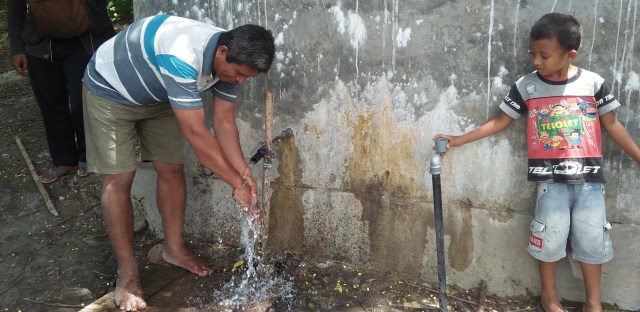
I again saw the power of ‘home’ when we visited a water project in the community of Paranda the next day.  Pak Isaac leads the community, and his perpetual bare feet are perhaps a metaphor for the way he feels about the place: always comfortable, ever at ease.  While our local partner organisation arranged the materials and some technical help, Pak Isaac and his community have been hand-digging the 3kms of pipeline that carries the spring water to their homes.  Each of them moves comfortably through the jungle.  They know the good bends in the river, the quiet places to rest, where to find beetle nut when stocks run low.  They converse with one another with a familiarity that only years – perhaps generations – can provide.

Later that day we head out and arrive at the intersection in Wula.  The way back is a left-hand turn.  If we turn right, and head a few hundred metres up the road, we’ll find Ruba’s house.  Ruba’s a lively, good-natured guy I met 15 years ago.  We’re a similar age – early 30’s – but he’s dying from a cancer that’s turned his chest into an open, festering wound.  He was told he would need 30 thousand dollars and a trip to Java to sort it out, but that’s an impossible amount of money, and he was told even that amount of funds and travel might not fix it.  So he chose to save his family the debt and is preparing to die at home.

It’s a common assumption that reducing poverty is synonymous with getting economically poor people to adopt the lifestyles of their rich brothers and sisters in more industrialised countries.  Move to the city, get a waged job, increase your personal wealth.  I beg to differ.  Like many people the world over, connections to community, culture and land mean they’ll probably never want to move far from their place of birth. It’s home.  You can hear its call from thousands of kilometres away, and you know you’ve arrived when you look down and your feet are bare.

Reducing poverty shouldn’t mean giving away all that is ‘home’.  A person with wealth but no connections to culture, community and land would struggle to be classed as a person, let alone a rich one, by most indigenous people.  Rather, communities need to decide for themselves (perhaps with some external facilitating and input) what needs changing.  The lady in Kannanga perhaps needed the travelers and bustling stories of Kannanga to feel most alive.  Pak Isaac and his community wanted clean water so they’d not get sick so often.  Ruba probably wanted access to affordable medical care.

As I write this on my way back to Perth – and feel that longing for the familiarity and comfortableness of my own home and family, I’m fairly sure that none of the good folks I met this past week would want to trade all of the beauty that is their community and their landscape for significant financial gain.  They don’t necessarily want piles of cash or a solid investment portfolio.  That’s usually not the kind of wealth they’re chasing.  They’d just like to have a decent quality of life and a few safety nets for the times when things go wrong.

And I reckon that’s a reasonable and attainable – even admirable – goal for us to work towards together.IMG20190313125000

Posted in Uncategorized | 3 Comments

Two chapters and a verse

Chapter 1: Bergsma, C. 2018. ‘Yelling at God about poverty’ in Where spirituality and justice meet.  Edited by Steve Bradbury and Lyn Jackson.   Wantirna, VIC: MST &Graceworks Private Ltd.  pp 43-64. Available here. This book is a collection of student essays from one of the units of the Masters of Transformational Development that I completed late last year.

Chapter 2: Luetz J.M., Bergsma C., Hills K. 2019. ‘The Poor just Might Be the Educators We Need for Global Sustainability—A Manifesto for Consulting the Unconsulted’ in Sustainability and the Humanities.  Leal Filho W., Consorte McCrea A. (eds) Springer, Cham. pp. 115-140. Available here. This chapter expands on my Masters research paper to suggest that if we want to talk about global sustainability, a good starting place might be listening to and learning from the folks who live more sustainably than anyone else – people experiencing poverty.

A verse:  I love the song ‘Instruments of Peace’.  While there’s a number of versions, it’s a beautiful prayer that’s loosely based on words ascribed to St. Francis of Assisi.  Phil Graham, Mark Curtis and myself led this song at the TEAR conference, but as we were prepping for it, I felt the tension between the hopefulness of the song and the reality of the shallowness of my ability to be an ‘instrument of peace.’  So I wrote a spoken word/poem thing and we used it as a type of mid-song reflection.

Long story short, my brother Delroy heard it and offered to record it.  It was fun to experience the process of recording a song, and Del has a real gift for capturing what you’re after while adding layers and editing it to make it sound better than you’d have hoped for.  So thanks heaps Del!

If you have ears, have a listen.

Phil Graham: lead vocals, guitar, mandolin, foot-tamborine thing.

Delroy Bergsma: back-up vocals, production wizardry.

Yours truly: back-up vocals, mid-song mumbling.

Location: a lounge room in Beaconsfield, Western Australia, and a few square metres of carpeted shed down the road in Hilton.


Posted in Poetry | 10 Comments

Change can be as slow as I am

I was asked to facilitate a workshop at the recent TEAR conference in Perth, and share a few things that I’ve learnt as my understanding of the gospel has developed over the past decade.  I’ve by no means completed the learning process, but I thought it might perhaps be helpful and encouraging to some of you if I share those thoughts here.  At very least, they’ll be an interesting marker for me to look back on in the years ahead as my understanding and life choices develop further.  But here’s the second of three that I’ll share over the next few months.

Another thing that I’m learning is that change is a very slow process, and that quite often it simply doesn’t happen.  We need to expect this and get comfortable with it.

I reckon that we have been hardwired to have a bias towards hope – and I think that’s a God-given gift.  But we often confuse hope with optimism – this idea, reinforced by every advertisement, that change is needed and possible and easy and quick, and that life should perpetually get better, and if it doesn’t, we’ve failed.  The truth, even before looking outside of myself, is that change takes a long time, and it’s a slow process that ebbs and flows and sometimes stagnates or even goes backwards.

15 years ago it would have been fair to describe me as a pretty hard-core conservative Christian with a very narrow view of the gospel.  I thought that refugees were terrorists and job-stealers.  I thought that drug addicts should be left to rot in prison.  I thought that single mothers deserved a difficult life, that the environment was a resource to be exploited for my personal pleasure, that my money and assets were, well, mine.  I thought that the poor were lazy, that welfare is evil.  Jesus was my ticket to heaven, and following him was primarily about getting my external, individual morals in order.

Well 15 years has turned me into someone who has very different views and a very different heart than my old self.  And if it took 15 years for me to become more empathetic, more involved with the vulnerable, more reciprocal in my relationship with the environment, more generous, less money-oriented, then I should give everyone else at least 15 years to change.  And that’s not at all being patient or generous, that’s just being fair – and given that everyone’s circumstances are unique, fair might mean that some folks need more than 15 years to change.  But again, I think we hear too many stories of incredible and/or rapid change while forgetting that Jesus’ life (from a purely narrative perspective – particularly in Matthew’s gospel) steadily got worse and ended up with him dead on a cross.

Change happens slowly, often not at all.  My role isn’t to change people or the world – that’s far beyond my control, and the only way to get that kind of change happening is to legislate, make new rules and police them hard.  That sort of change rarely lasts or gets beyond skin-deep.

I can, however, and must, make sure that I am perpetually open to change if I want others to be open to change. I must make sure that I am compassionate and empathetic when asking people to be more compassionate and empathetic. I must speak and act with love if I want people to be more loving. I must demonstrate generosity to the ungenerous if I want to encourage them to share more freely.

And I must be patient and hopeful as heck, because change takes a long time and often doesn’t happen – just as change takes a long time and often doesn’t happen in my own life.  In a world that measures the value of a thing by the amount of its measurable outputs, I believe the gospel offers a far more sustainable and realistic alternative: focus on following the Spirit’s meandering promptings, and let God sort out the rest.

I’ve been told he has a plan.

Posted in Uncategorized | Leave a comment

Justice and mercy are often boring

I was asked to facilitate a workshop at the recent TEAR conference in Perth, and share a few things that I’ve learnt as my understanding of the gospel has developed over the past decade.  I’ve by no means completed the learning process, but I thought it might perhaps be helpful and encouraging to some of you if I share those thoughts here.  At very least, they’ll be an interesting marker for me to look back on in the years ahead as my understanding and life choices develop further.  But here’s the first of four that I’ll share over the next few months.

I don’t know about you, but as my understanding of the gospel moved from a very narrow ‘Jesus is my ticket to heaven’ to ‘Jesus is the restorer of everything that is broken’, I began hearing fascinating stories of people doing full-on, adventurous stuff in the name of Jesus.  Things like inviting the homeless to live with them, community dinners for those on the fringes, turning empty buildings into flourishing communities, getting arrested or doing creative non-violent resistant protests.  And while those things are exciting, in many instances necessary and very often good and right, it helped to foster this idea in my mind that the more extreme your actions and the greater risks you took, the more you are following Jesus, the more you were doing justice and righting the wrongs in the world.

I experienced (and contributed to) the perpetuation of that very myth (that doing justice is fun or easy) at Churchfreo, a small church which Michelle and I remain deeply committed to.  Churchfreo initially had a Sunday evening gathering, and back then it would have ranked high on the ‘struggle for justice’ noticeboard.  We had couches for pews, we gathered in an old run-down building, we shared dinner with the homeless as part of the gathering, had drunk guys take over the microphone, handed out blankets and so on.  And it was good – at least initially.  But there soon developed a sort of distance between what I would tell people about Churchfreo, and what was really happening in my relationship with them.  It was fun to tell people I was involved in this kind of edgy Church that serves and knows the homeless community in Freo.  It did wonders for my ego, and I loved watching people’s reactions.  But in reality, my relationship was pretty thin with the folks who walked through the door, and we both put on a façade of sorts so that we’d both get what we wanted.  The homeless folk rightly wanted a warm meal on a Sunday night, and I wanted to be able to say that my Church was engaging the homeless.  And so we’d do this little dance together, though the two of us never got around to acknowledging it.

And I still perpetuate that myth today.  I was arrested a while ago as part of a refugee issue action, and at times it felt like I was more interested in getting arrested than in dialoguing with the politician we were targeting.  When I built our house a few years ago, I hired homeless guys as labourers, one of whom I had to fire twice – a great ‘justice’ yarn, right?  We built some units next door, and our first tenant was a guy who was fresh out of rehab, and another was a refugee who didn’t trust the Red Cross.  More juicy stories for the justice newspaper.

But what if we frame those examples differently and flip the table on who is helping who?

For example, my arrest made very little difference to the refugee cause, but it gave me a better understanding of the power dynamics and helpless feeling that people get when they go through the judicial system.  Tom, the guy who helped me build the house, was the only person (that I can remember) out of all my friends and family to question whether I really needed to build such a big house.  I hired a much-needed prophet and fired him twice.  Tom was right, and it took us a few years before we heeded his judgement and downsized.  How about framing our tenants in this light: our first tenant was a mate of mine who was new to the faith when I met him – and his love for Jesus was so infectious that I wanted him as my neighbour in hopes his faith would rub off on me.  Another became a friend of ours who had so very little but was so incredibly generous with it that I realised how shallow and guarded my own generosity is.

See how much difference the framing makes?

Think about the issue of ‘justice attractiveness’ a little further: you’d get full props and some social cred if you went down and dished up some dinner every Friday night at a soup kitchen.  You could add that to your resume and you’ll  receive acknowledgement and applause when folks hear about it.  Now what if you made a commitment to invite the guy next door over for dinner every Friday night because you know he’s not doing well and needs some company?  Or imagine if you know the old lady across the road struggles to pay her bills, and so you slip some money under her front door from time to time. These things don’t sit so well on a resume.  You can’t name drop them.  But they are just as much acts of justice and mercy as serving up dinner at a soup kitchen or hiring a homeless guy.  And perhaps given their hidden nature, and the un-importance we’d typically give them, they might very well be the most important tasks to be done in the kingdom of God.

Please don’t misinterpret what I’m saying.  I’m not suggesting that getting arrested or sharing dinner with the homeless are pointless or ungodly exercises – Jesus himself did both of these as part of his restorative work, and they’ve been regular works in the history of Christianity.  I believe that they are necessary works (among many others) that should be done when the time is right and the Spirit prompts.

But I also don’t want to give the impression that Christians have to be doing big, amazing things to be neck-deep in the kingdom of God.  It is equally important, and at times more difficult to do – as Mother Teresa said – ‘little things with great love.’


Posted in Uncategorized | 8 Comments

What news is good news?

‘Abundance means having more than enough.  So a society without an understanding of what enough is will never experience abundance’ – Bob Goudzwaard*

I was rather proud to find out that Beaconsfield – the suburb where I live and drink most of my tea – was recently deemed the most generous neighbourhood in Western Australia.  We gave more than all of the suburbs in Perth’s golden triangle – boom! We did this despite earning 7% below the median wage – bam!  We gave the most as a percentage of income in the state of Western Australia – ker-pow!

Well, I was rather proud of this news until I arrived at the second sentence in the article, which revealed that on average we gave $227 this past year despite earning $75,000 in that same period.  So a regular Beaconian (?) gave 0.3% of their income away – $4.36 per $1,400 weekly wage.  That’s still higher than our national giving of 0.226% of GDP (the lowest ever since we started recording), but 0.3 percent?  Do we really deserve the title of ‘most generous’ with that paltry amount?  I have friends who are on welfare who give away more than twenty times that as a percentage of income.

If you’re responding to the above in the same way that I did, you’re probably attempting to do some quick maths to calculate last year’s tax-deductable donations as a percentage of your income, and you’re already half-way up your moral horse and about to join me as I gallop and shout my way ‘round Beaconsfield’s top paddock (Bruce Lee Oval for those in the know).

But before the rodeo starts, let’s remember that giving in God’s books was never about getting the sums right, and didn’t attract labels like charity or philanthropy that make the giver feel good.  Giving to the economically poor was simply an act of justice (correcting unequal division of God’s abundant provision) and righteousness (following God’s design for a flourishing earth and the people who live on it).  It wasn’t so much an obligation as an indication of whether a person or a nation was flourishing and living along God’s patterns for creation.

It’s pretty logical really, because the cracks always appear at the weakest points first, and society is no different.  The vulnerable in our society are the canaries in our proverbial carbon-free coal mines.  They feel the heat and price rises and changes in the legal, welfare, and social safety nets quicker than we do. Their vulnerabilities make them highly sensitive to new injustices, and thus they serve as sentinels of sorts in our society.  Perhaps that’s not the way we typically think of communities or people who are dependent on welfare.

But in the biblical narrative of God’s goals and purposes for humanity, the vulnerable are always a metaphoric mirror that God holds up to the rest of the community.  Their deficiencies and needs are often highly reflective of wider – and usually deeper, more hidden – societal short-comings.  And so whenever the biblical prophets had a strong message of correction for those in power, it almost always involved pointing to the situation of the vulnerable as if to say if everything’s so peachy, why are these people not doing so well?  Think Nathan, David and Uriah’s wife.  Elijah, Ahab, and Naboth’s grapes. Amos, Uzziah and the ‘special’ taxes levied on the economically poor.

But the flipside is also true: when the vulnerable are flourishing, the kingdom of God has arrived in greater measure. And so Jesus stood up in the synagogue and read from Isaiah about releasing the captives and the oppressed, stating that with his arrival, these things were about to be rolled out.  That’s why Jesus answered John’s question from prison – about whether he was the messiah or not – by pointing  to the improvements in life for the blind, the sick and the poor rather than the number of people following him or the number of conversions and baptisms.  This was key evidence that God’s kingdom had arrived. The cracks were closing up.  Society was on the mend.  Things were beginning to align with God’s design and purposes for humanity and creation.

This suggests to me that Australia’s suburban and national giving are two small indicators that our national ‘progress’ is perhaps less peachy than we think it is.  Our pleasure, health, education, consumption, comfort and GDP levels have steadily risen in recent decades, and our sentinel canaries are singing a song – but the trained ear will recognise that the tune has more in common with a dirge than a hymn.

Keep the marginal close if you want to hear the heartbeat of your community.  Better yet, make them your friends, learn their names, share your meals and your life, the resources you’ve been given to disburse.  And chances are, when folks ask whether Jesus really makes a difference in the world, you won’t need to point to the number of conversions or baptisms or people following him.   You’ll just be able to introduce them to your friends from the margins and let them tell their story.

I reckon it’ll be euengellion-esque, gospelly. Good news.

[insert fireworks]

_______________

*Reclaiming our future: the vision of Jubilee (2001, 183).

Posted in Uncategorized | 6 Comments

Who’s Ships?

I spent last week in Malaysia, rounding out my studies considering all things economic.  As always, the world is much bigger (and stranger and scarier!) than I’d previously thought, and there are some intriguing alternatives to the dominant economic narrative we tend to hear in the Australian context.  One thing in particular struck me as I listened to the teaching and insights of C.B. Samuel: I have a lot of work to do before my understanding of biblical stewardship and my penchant for private ownership are reconciled.

I mean, ask any half-baked evangelical as to how they’ve obtained their wealth thus far, and you’ll likely get a reply along the lines of ‘it’s a blessing from God.’  And I’d agree.  If I’m really honest, I can’t really claim ownership over the things that I ‘own’ because there’s been too much input from others.  I can’t ever return the vast resources my parents, family and friends have put into my life; I can’t return the sunshine that grows my veggies or repay the trees for cleaning the air I need to stay alive; I can’t trade my particular talents for others or buy more on eBay.  In short, my existence is a gift from a holy trinity of sorts: without others, the earth and God, I’d be nothing and have nothing.  What I am and ‘have’ is a gift entrusted to me.

However, between my understanding and practice of stewardship – the task of carefully disbursing what’s under my care – there seems to be a space about as wide and as smoggy as the Malaccan Strait (which we also visited last week).  I talk about stewardship of God’s resources, but then go on to describe my finances, gifts and resources using first person pronouns (c.f. the sentence just gone).  Consider the dichotomy I live: I’d never allow our Church treasurer to keep the annual income and expenditure under wraps even though she’s my lovely wife who I trust. Her job is to ensure that the funds under her management are tracked and disbursed along the lines of our vision and mission – and we hold her accountable to that task and audit her work every year.  We do this because we know that money without accountability does funny things to a steward’s head and habits.  But the resources (financial and otherwise) given and entrusted to me?  Well, apparently they don’t need tracking or auditing.  They don’t muck with my head or my habits.  You can trust that I’ll disburse the whole lot in keeping with the vision and mission of Jesus who I claim to follow (c.f. Lk. 4:18-19). [Insert the gentle waft of a sewer rat].

Ahem.

Allow me to give you one very real (and hopefully concerning!) example that occurred to me in these last few days.  My wife and I are planning to build a house in the next year or so.  We estimate that we’ll spend about $250,000 on it – a huge sum of money – all of which will be loaned.  The house will be made from the earth’s resources and will contribute a bunch of landfill even if we make considerable efforts to reduce the amount of waste generated.  The debt will necessarily limit how much freedom we will have in terms of giving of our time and money to others (the bank will help us to make sure our repayments are our highest priority in life).  Not only that, building a house throws up numerous temptations like greed and pride (how big, what colour, what will people think?).  So this decision will necessarily impact all those we are inextricably linked to – God, others, and the earth.  Yet in the Australian context, we are permitted to make this decision entirely on our own without having to give account for how it aligns with God’s desire and design for humanity and the earth we share.  Doesn’t that strike you as peculiar and a little disconcerting?

(To be clear: this could be extrapolated out to any situation where we are disbursing the wide range of resources under our care – from daily spending habits to the why, what and for whom of our consumption).

C.B. Samuel pointed out that Jesus spoke about the dangers of money an awful lot while his modern followers don’t; in fact, C.B. went to argue persuasively that money is a spiritual power (it’s not evil, but it has undeniable power – and which other power would we ever argue is best left unchecked?).  If either of those statement is correct, then why do I want to remain behind the safety of the taboos we’ve created around wealth?  How might I transition from the lense of ‘my shi**’[1] to a biblically grounded and lived ‘stewardship’?  How might we hold each other accountable to the task of disbursing the gifts given to us towards ‘the restoration of all things’?  How might we do that in a way that is grounded in love and grace, producing Spirit-shaped fruit and avoiding the creation of laws and coercion and guilt?

I don’t know, but I’m happy to be a guinea pig.

So help me friends: I need your wisdom, gifts and assistance. Again.


Ships.  Of course.


[1] Ships.  Of course.

Posted in Uncategorized | 5 Comments

The power of equality

These past two weeks in West Timor and Sumba have been rather challenging.  My young family came with me this time, and they did incredibly well considering that we moved house every two days, met countless new people and spent long hours on rural bumpy roads.  Throw in a few late nights, upset bellies, a dog bite (Elijah), a head wound that probably should have had stitches (Chester), and if you have or have ever had young kids, you’d probably agree that makes for a challenging trip.

Yet last night as I lay there under a Waimarang mosquito net, I couldn’t help but feel strangely encouraged by our time here.  And as the clock snuck ever closer to 2am, I reckon I figured it out.

I think it was Robert Chambers who wrote in the ‘70s that the power dynamics of aid and development relationships are largely unacknowledged – particularly by those providing funding – and I reckon his words still ring true today.  Perhaps in a reflection of the depth of influence which neo-liberal economics has on us in the West, power tends to follow the money trail from donor to beneficiary.  While this might often be the way things work in the Australian context, I would argue that it’s certainly not always the best way to get things done – particularly in the aid and development sphere.  For example, while I have a very high level of influence over which proposals sent to Amos Aid will get approved, in reality I really have no idea what people need in Kuibaat, West Timor – or how to best address those needs.  Should I really have that much power over a decision I have so little information about?  Probably not.

But it’s hard not to get sucked into the tempting lure of having that sort of power over others – and on bad days I undoubtedly abuse my position.  There’s an uglier part of me that wants to play god in the lives of others, that wants to have them clamouring for my approval, my influence, my presence – perhaps because it gives me the brief illusion that I am loved.

And so I’m highly appreciative of the challenge laid out to me in Amos Aid’s mission: serving the poor as equals before God.  Serving the poor is – in some ways – easy.  Serving the poor as equals before God is significantly harder.  It shifts the goalposts from service delivery to relationship.  It means that my job includes attempting to address historical, deeply rooted power imbalances.  It means that I need to get over my pride and desire to pay for everything and instead learn to accept the incredible generosity of rural Indonesian hosts – as they in turn accept Amos Aid’s generosity.  It means that I request their advice and assistance for my life as they request ours.  It means that I need to repeatedly re-calibrate my inherently racist brain so that I am able to believe – deep in my bones – that each person I meet is truly my equal and an incredible being uniquely hand-crafted by God.  It means that I need to be more interested in people than their poverty.  On good days I’m able to do some of the above, though I wish it came more easily.

This is perhaps why these challenging weeks developed an encouraging quality under that 2am mosquito net.  As I reflected on the past two weeks, I saw glimpses of equality; one partner giving a helpful critique of and creative solution to another project we’re designing; the tentative sharing of vulnerabilities and fears with another; just last night, the division of project decisions and design according to giftedness – not according to bank balances.  It felt more like friendship than the manoeuvrings of chess that I at times turn my job into.  And in those moments this past fortnight, I believe the kingdom of God grew ever so slightly; in their lives, in my life and the lives of the people we’re attempting to serve.  For that I’m thankful and left hungering and praying for more.


Posted in Uncategorized | 6 Comments