And God formed humanity from the dust of the earth;
Adam from ‘adama’;
humans from humus. (see Genesis 2:7)
So runs the creation narrative in the Hebrew Bible, a very significant story that maps out the contours of what it means to be human for those of the Jewish and Christian faiths – a creation story that interestingly stands in marked contrast to its Ancient Near Eastern contemporaries. But that’s another story.
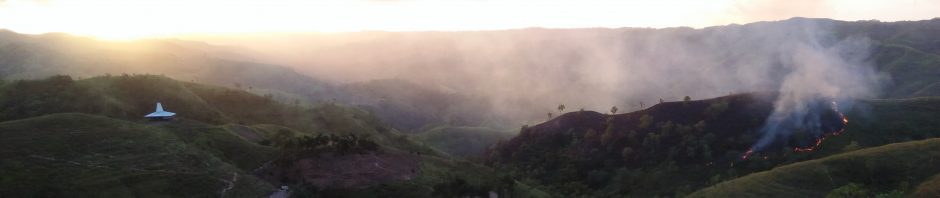
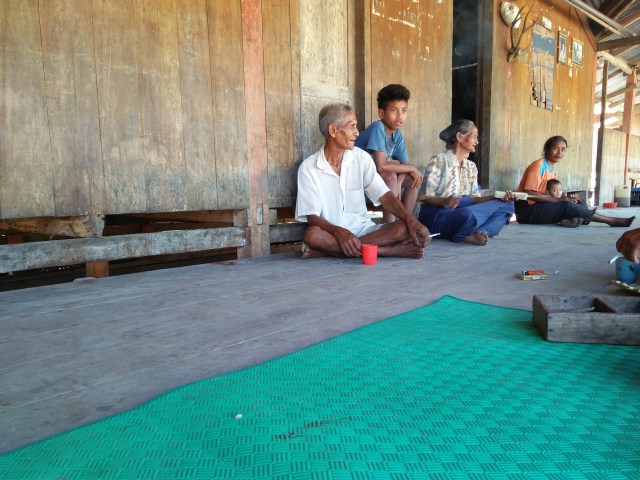
I’ve recently been doing some reading around the significance of ‘humans from humus’; the way we were designed to be mutually inter-dependent on the rest of the created order, and as often seems to happen, the practical realities of this theological anthropology began to form as I sipped sweet black coffee on the verandah of a traditional thatched home in rural Indonesia.
We’d just wandered through an elderly gentleman’s extensive orchard and gardens though they were anything but the neat hectares of mono-crops I’m used to seeing back home. We had stopped in the middle of a semi-cleared patch of scrub, and with an gentle wave of his hand he mumbled, Iya, disni; here it is. I asked what sort of plants he was currently growing in hopes that he might identify some edible plants among the brush; and with a weathered but educated finger, he transformed that thicket into an informal orchard of rambutan, mango and a host of other tropical fruit trees. He pointed to the weed I was standing on and it became a peanut bush in the early stages of growth. I apologised, stepped off it and crouched down to assess the damage; he pointed out that the plant I was now standing on was a type of spinach.
He laughed and asked if I wanted to see his nearby coffee and mahogany plantations; Iya, saya mau; I’m keen, so I followed the bare-footed gentleman and his six-year-old sidekick to the edge of a valley a few hundred metres off. Sure-footed and moving with his usual grace and gentleness, the elderly man disappeared down a narrow track, one hand behind his back, the other caressing a cigarette, never missing a foothold, never pausing; ever casual, always comfortable. A 6-foot windmill of bule arms and legs followed him as I tried to keep up with the pillar of cloud that was perpetually disappearing behind mossy rocks and bright green foliage. The six-year-old skipped between the elderly man and myself like a mountain goat that’d just discovered caffeine, laughing with me at my every slip down the hill.
Well we eventually found the coffee, the siri, the coconut, the mahogany and another half-dozen or so types of fruit and timber-grade trees at the bottom of the gully. We stood there in the middle of it all for a few minutes post-tour, and my senses soaked it in; the sounds of the trickling brook; the lushness of the place; the shades of green; textures of bark and the shapes of leaf, the songs of tiny birds that fluttered in and out of the foliage; that jungle feeling; humid, heavy, earthy. I got thinking about this man who has lived in this place his entire life. He literally knows every tree, every plant in this valley. He knows when they fruit, what pests to look for, knows each foothold in every coconut tree, which coffee tree is struggling, which one he planted first, which rock commands the best view, which timber is suitable for what project; where to capture sunlight on a cold day; where to stay cool when it’s hot – he knows this place. Knows its strengths, its vulnerabilities; knows how to best look after it, knows what it will likely produce in October given the weather we’ve just had in February. No laptop, no Google, no library of books, no university degree.
These thoughts followed me back to his verandah where I was given a taste of his Eden-valley produce. I couldn’t help but reflect on the contrast between his comfortableness and my awkwardness on that valley descent; his depth of local knowledge and my ignorance of native plant species back home; the contrast between his ability to draw almost his entire sustenance from a one kilometre radius of his house and my global consumption; his clear dependence on the trees and soil and weather and my façade of independence from it; his connection to the earth and my relative isolation from it.
What’s the significance of humans from humus, Adam from adama? How might the Biblical creation narrative shape the way I interact with the rest of nature? I don’t entirely know. While my context is different to this elderly man and his caffeinated, mountain goat of a nephew, their unpretentious example somehow draws my heart to explore this question some more in the months and years ahead…
 patmos
Thank you son. Another thoughtful glimpse. Love. Dad.
Dear size 16 boots, creator of peanut butter and spinach dip…thanks for that story. It’s a wonderful play between the creation of man from earth, God’s gift of produce for our sustenance from which we were formed, and the challenge of caring for that wonderful gift. Hats off to the old man and his springbok nephew who dominated the oaf :). Thanks heaps, Daniel