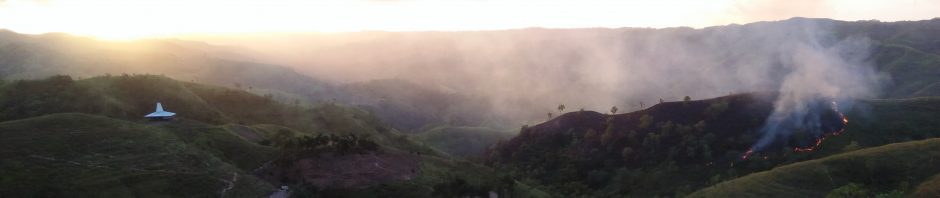
She runs a little warung in the hilltop valley of Kannangga, the pitstop that everyone looks forward to. The road to and from her timbered café is winding, ever winding, twirling back and forth through the mountains, dancing up and over, ‘round and doubling back again, twisting and spinning to the rhythm of vehicles switching between first and second gears as they attempt to stay upright and forward-moving on a road that seems more pothole than asphalt.
It’s a longed-for pitstop for me, but it’s home to her. It’s a place where I rest a while, sip some sweet black coffee and build up some courage for the next hour of gorgeous, spine-pounding road. But it’s the place she grew up in, the place she knows intimately. It’s home to her, and its memories and company were sweeter and more compelling than the steady job she tried in Surabaya some 900kms away. So when home called her name, she returned and began serving kopi to weary travelers like me.
I again saw the power of ‘home’ when we visited a water project in the community of Paranda the next day. Pak Isaac leads the community, and his perpetual bare feet are perhaps a metaphor for the way he feels about the place: always comfortable, ever at ease. While our local partner organisation arranged the materials and some technical help, Pak Isaac and his community have been hand-digging the 3kms of pipeline that carries the spring water to their homes. Each of them moves comfortably through the jungle. They know the good bends in the river, the quiet places to rest, where to find beetle nut when stocks run low. They converse with one another with a familiarity that only years – perhaps generations – can provide.
Later that day we head out and arrive at the intersection in Wula. The way back is a left-hand turn. If we turn right, and head a few hundred metres up the road, we’ll find Ruba’s house. Ruba’s a lively, good-natured guy I met 15 years ago. We’re a similar age – early 30’s – but he’s dying from a cancer that’s turned his chest into an open, festering wound. He was told he would need 30 thousand dollars and a trip to Java to sort it out, but that’s an impossible amount of money, and he was told even that amount of funds and travel might not fix it. So he chose to save his family the debt and is preparing to die at home.
It’s a common assumption that reducing poverty is synonymous with getting economically poor people to adopt the lifestyles of their rich brothers and sisters in more industrialised countries. Move to the city, get a waged job, increase your personal wealth. I beg to differ. Like many people the world over, connections to community, culture and land mean they’ll probably never want to move far from their place of birth. It’s home. You can hear its call from thousands of kilometres away, and you know you’ve arrived when you look down and your feet are bare.
Reducing poverty shouldn’t mean giving away all that is ‘home’. A person with wealth but no connections to culture, community and land would struggle to be classed as a person, let alone a rich one, by most indigenous people. Rather, communities need to decide for themselves (perhaps with some external facilitating and input) what needs changing. The lady in Kannanga perhaps needed the travelers and bustling stories of Kannanga to feel most alive. Pak Isaac and his community wanted clean water so they’d not get sick so often. Ruba probably wanted access to affordable medical care.
As I write this on my way back to Perth – and feel that longing for the familiarity and comfortableness of my own home and family, I’m fairly sure that none of the good folks I met this past week would want to trade all of the beauty that is their community and their landscape for significant financial gain. They don’t necessarily want piles of cash or a solid investment portfolio. That’s usually not the kind of wealth they’re chasing. They’d just like to have a decent quality of life and a few safety nets for the times when things go wrong.
And I reckon that’s a reasonable and attainable – even admirable – goal for us to work towards together.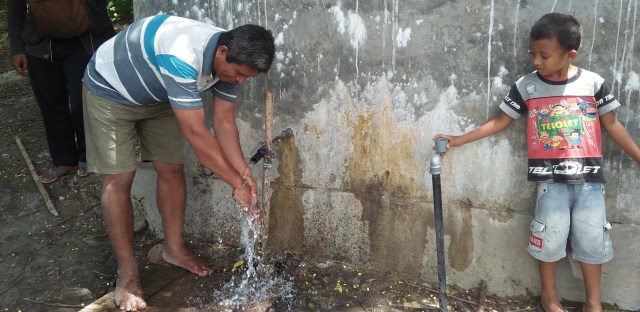
 patmos
Accurate assessment and observation ..
in my view …. for a people that values relationships over the accumulation of stuff. (Thank you for letting me tag along this time, Clint 😃)
It was great to have you along for the chats and the (bumpy, slippery, muddy) ride!
Love this post Clint, and I have a strong sense that the people you speak of have a much better perspective than we do on what is really important in this life. I am sure if you ask any wealthy, ‘successful’ man, he will admit that he has yet to arrive at a place where he feels fulfilled or content enough to remove his shoes…