
I wrote this about a year ago, and it’s been sitting in the drafts folder ever since. I actually forgot that I had written it, and only found it today. So I blew the e-dust off it, had another read and tweaked it a little more.
I think I never shared it because I wasn’t as convinced at the end of it as my writing sounded. Odd perhaps. And while I’m still not comfortable with how strongly I’ve argued this one, I still feel it’s worth sharing – but with this caveat: I’m not as confident as the guy who wrote this.
These past few months, we’ve been working on a government grant application for funding. When I say we, I mean Jake, my colleague at Amos Australia who has a much greater knack than me for grant and policy writing. I love working with people who are gifted differently than me. They’re something to behold, and I’m thankful for them.
As part of the prep for writing this grant proposal, Jake and I attended an information session about the grant. While it was helpful, I came away with a rather strong sense that the whole grant selection criteria is more about reducing the Australian government’s risk of reputational damage than about assisting economically poor communities abroad. And so along with the grant submission, we’ve had to prepare a number of additional policies, including one on gender and another regarding disability inclusion.
While it’s certainly been a helpful thing for us to think through our positions on these issues and attempt to articulate how we’ll try to address them, I couldn’t help but contrast DFAT’s rather bureaucratic approach with what I experienced in a few rural Indonesian communities a few weeks back.
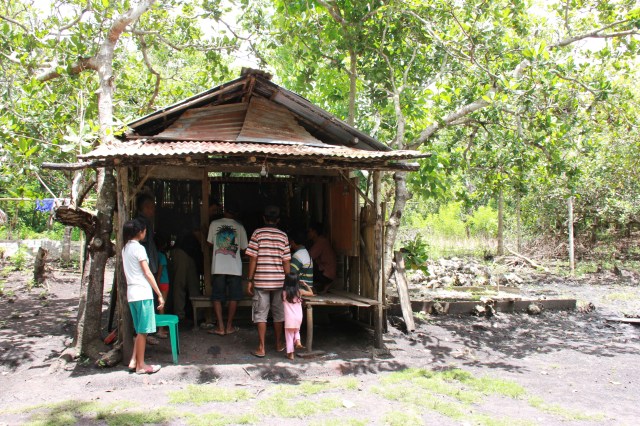
For example, I know that our partner organization has gender inclusion policies, and I would say that by and large they attempt to ensure that women’s ideas and opinions are included in village discussions. But I visited one community earlier this month where women were present, but none spoke. We visited another, and the women outnumbered the men 2-1, and out-spoke them 5-1. At one community I didn’t see anyone with clear mental or physical disabilities – were they hidden away (as I know happens sometimes), or were there simply none? At another, I found out that one of the women involved with building the greenhouse was mute and had a lower than average mental capacity. Perhaps I didn’t realise because she was so well included.
I’m aware that these are only snippets of time – glimpses of community life that are momentary and altered by my presence, but I still think they highlight something important.
Here’s the challenge for us: it goes against my very approach to enforce policies onto our partners, particularly when the policies are in part based on culturally contingent preferences. And here’s a further challenge: our partners can’t enforce gender and disability policies on the communities they serve (well they can, but they’ll be ignored as soon as they pass the community gates on their way back to the office). So do our policies make a difference? Can they make a difference? Is there a different way to bring about change and ensure that we’re helping more than we’re hurting?
Over dinner at a little roadside warung on the island of Rote, I asked Pak Ferdy – a staff member of one of our partner organisations – why he got involved with this line of work. It’s not a seemingly natural choice to make because it means lots of travel, longer hours and less pay than his previous job teaching at a school in the city. He described a ‘sense of a calling’, and then explained the importance of his staff going beyond outcomes that are SMART (Specific, Measurable, Achievable, Realistic, Timely) to outcomes that reach into the realms of the spiritual and social relationships in the community – which are typically not so ‘SMART’ – without which, Pak Ferdy said: “our programs are worth little.”
Side thought: there’s an opportunity here for some great counter acronyms –
MESSY (Muddled, Easily derailed, So-So and Youthfully optimistic)?
DUMB (Dreamy, Unmeasurable, Mammothian, Backbreaking)?
CRAP (Chimerical, Relational, Arduous, Perplexing)?
I have a hunch that the relatively recent rise in policies for almost every sphere of our organisations has its conception in our (typically Western?) love affair with litigation, and our hope that creating a new rule will magically solve the problem in front of us. Think about the typical Australian response to a robbery, a murder or an environmental disaster: more rules, greater penalties. But terror attacks still happen, the environment still gets hammered and people still get murdered.
But if I think about any relationships that I’d consider healthy, and consider what holds them together, I can’t think of any that have a strong policy portfolio. There’s still boundaries, and discussion from time to time about the appropriateness of those boundaries, but I have a hunch the relationship flourishes because, well, it’s relational.
Again, the distinguishing characteristic of the various inclusive communities that I visited wasn’t so much their policies (I doubt they’d have any) but the way that they see and treat each other. One community has recognized that their greatest wisdom comes from listening to everyone, while the other perhaps still thinks that the men know best (well… perhaps the men there still think the men know best!). One village has realized that including a woman with a disability means there’s perhaps more laughter and fun in building a greenhouse than locking her away at home. Or maybe they just include her because, well, she’s one of them.
I’m not suggesting we throw away our policies. They are hopefully the articulation of how we see our theology in action, they can be helpful reminders of what we’re aiming for, and they can help us focus, avoid past mistakes, utilise the learnings of others and hold us accountable for what we set out to do.
But perhaps we need to hold them much more lightly than we do. Perhaps we need to lower our trust and faith in them as effective agents of change. Perhaps we need to stop developing them as a form of quasi-insurance that is more about protecting us than helping us serve people more effectively. Perhaps instead we need to put more energy towards encouraging the likes of Pak Ferdy’s approach. Perhaps the key is finding people like him and partnering with them. I’m fascinated by the fact that Jesus primarily used stories, conversations and examples to get his point across. The law, Paul wrote, didn’t work – all it ever did was highlight deficiencies and failures. Alternatively love ‘fulfils’ the law, achieves that which the policy aimed to do, but could never deliver.
I have no romantic visions that ‘if we all just loved a bit more and better, it’ll all work out.’ [Although I do believe that’s an often maligned but eternal goal, and I reckon we’ve got to keep giving it a red hot go in the meantime – even when it ‘fails’ (although love never fails, we tend to stop loving, and then what we’re attempting fails – at least that seems to be my pattern)].
But what I am suggesting is that if we spent more time building relationship with our partner organisations and their staff, we’d both have a much better handle on where the other is at, and we’d be in a much better position to know how to approach a cross-cultural conversation about things like gender and disability inclusion. Perhaps we and our partner organisations need to make a point of regularly and mutually encouraging each other to make sure that our hearts are filled with love for those we serve – for that is when we’ll be at our best, deliver the greatest results and be the most inclusive. Having a heart of loving openness to whoever we meet is in itself transformational, and so perhaps change is primarily about being with, to borrow from Samuel Wells’ A Nazareth Manifesto. But it’s also quite likely that I’m setting up a false dichotomy. Maybe the tension between policies and relationships is just that: a tension I need to learn to live with. I’d be keen to hear your thoughts.
Policies can be useful and important tools – but they do have significant limitations that we need to be aware of. You can’t whip up a relationship like you can a policy. It takes time, patience, lots of grace, hope and trust. All the CRAP stuff really. And relationships can achieve a whole host of important things that a policy can’t prescribe or deliver or measure.
Maybe we just need a policy about how to use our policies.
I’ll ask Jake to draft one.
 patmos
Clint – I cannot really help you with this questions at all.
May I ask your permission to pass them over to my son, Ben Clarke? Ben lives in Adelaide, works for Tearfund, lectures at Uni and cooks for his family every night. Maybe you met at Surrender? He is really busy but I am sure he too would see what you are seeing. Masks every where!
Do you want answers or are you just needing to let off steam?
We are really slowing down, well I am. Col is making musical instruments, painting and encouraging me with his clear sighted faith.
Keep doing good, God smiles and opens amazing doors.
Ursula
>
Hey Ushie,
Lovely to hear from you – and good to hear that you and Colin are well. You’re very welcome to share this with Ben – I studied a few units of the MTD with him, and he’s cooked Sunday morning pancakes at our house before. He’s a wonderful man who was clearly raised by some wonderful people.
I think part of writing this was letting off some steam, but I am also intrigued to hear how other people (and organisations) view and practice the tension between policies and relationships. I don’t feel like I’ve settled on it yet, and hearing how other people view and wrestle with these things is helpful for me.
Nice to hear from you, and please give my warm regards to Colin.
Take care,
Clint.
I agree with you in that relationships are built on Love,having healthy boundaries and not being controlled by outside influences
Hey Oma, thanks for having a read and for sharing your thoughts – and you highlight an interesting point about ‘not being controlled by outside influences’. While I wonder if that’s possible (I expect that our web of relationships will naturally influence each other to some degree), being aware of what those influences are and choosing to what degree that influence will be permitted is certainly a worthwhile and helpful exercise!
Much love to you and Keith!